In today’s fast-paced digital economy, businesses must manage finance, operations, inventory, human resources, and customer data efficiently. Handling all these processes separately can lead to errors, duplication, and poor decision-making. This is where ERP software becomes essential.
This beginner’s guide explains what ERP software is, how it works, its benefits, key features, and why it remains crucial in 2026.
What Is ERP Software?
Enterprise Resource Planning (ERP) software is an integrated business management system that helps organizations automate and manage core processes in a single centralized platform.
Instead of using separate tools for accounting, HR, inventory, and sales, ERP connects all departments into one unified system. This ensures that everyone works with the same real-time data.
In simple terms, ERP acts as the central nervous system of a business.
How Does ERP Software Work?
ERP systems operate through a shared database. Each department accesses the system through specific modules, such as:
Finance & Accounting
Human Resources (HR)
Supply Chain Management
Inventory & Warehouse
Sales & Customer Relationship Management (CRM)
Manufacturing & Production
When data is entered in one module, it automatically updates across the entire system. For example:
A sales order updates inventory levels
Inventory changes update financial records
Payroll updates accounting reports
This integration reduces manual work and improves accuracy.
Key Features of Modern ERP Software in 2026
ERP systems in 2026 are smarter and more flexible than ever. Common features include:
1. Cloud-Based Deployment
Most businesses now prefer cloud ERP solutions, allowing access anytime and anywhere.
2. Real-Time Analytics & Dashboards
Business leaders can monitor KPIs, financial reports, and performance metrics instantly.
3. AI and Automation
Artificial Intelligence helps automate repetitive tasks such as invoice processing, demand forecasting, and reporting.
4. Mobile Accessibility
Employees can access ERP systems via smartphones and tablets.
5. Customization & Scalability
Modern ERP platforms grow with the business and adapt to industry-specific needs.
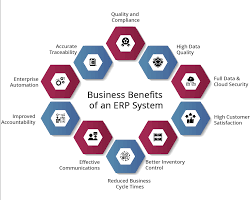
Benefits of ERP Software
1. Improved Efficiency
Automation reduces manual tasks and minimizes human error.
2. Better Decision-Making
Real-time data provides accurate insights for strategic planning.
3. Cost Reduction
By streamlining processes, companies reduce operational and administrative costs.
4. Enhanced Collaboration
Departments share a single source of truth, improving teamwork.
5. Regulatory Compliance
ERP systems help businesses maintain compliance with tax laws and industry regulations.
Types of ERP Systems
In 2026, companies typically choose between:
1. On-Premise ERP
Installed locally on company servers. Offers full control but requires higher upfront investment.
2. Cloud ERP
Hosted by vendors and accessed via the internet. Lower initial cost and easier maintenance.
3. Hybrid ERP
A combination of on-premise and cloud solutions.
Who Needs ERP Software?
ERP is suitable for:
Small and Medium Enterprises (SMEs)
Large corporations
Manufacturing companies
Retail businesses
Healthcare organizations
Construction firms
E-commerce companies
Even startups are adopting lightweight cloud ERP systems to scale faster.
ERP Implementation: What Beginners Should Know
Implementing ERP requires proper planning. Key steps include:
Identifying business needs
Selecting the right vendor
Setting a realistic budget
Training employees
Monitoring and optimizing after launch
Implementation may take several months depending on company size and complexity.
Popular ERP Software Examples
Some well-known ERP platforms in 2026 include:
SAP (SAP S/4HANA)
Oracle (Oracle NetSuite & Oracle ERP Cloud)
Microsoft (Dynamics 365)
Odoo
Infor
Each offers different features tailored to various industries and company sizes.
Is ERP Software Worth It in 2026?
Absolutely. As competition increases and digital transformation accelerates, ERP software becomes a strategic investment rather than just an IT tool.
Companies that use ERP effectively gain:
Better operational visibility
Faster response to market changes
Stronger financial control
Higher customer satisfaction