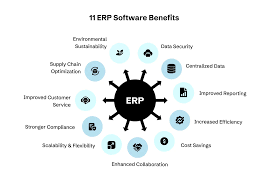
In today’s fast-paced digital economy, businesses need more than basic management tools. Modern Enterprise Resource Planning (ERP) software has evolved into a powerful platform that integrates core business processes, improves efficiency, and supports data-driven decision-making.
If your organization is considering implementing or upgrading an ERP system, here are the key features you should look for in modern ERP software.
1. Cloud-Based Architecture
One of the most important features of modern ERP software is cloud capability. Cloud-based ERP systems offer:
Remote access from anywhere
Lower upfront infrastructure costs
Automatic updates and maintenance
Scalability as your business grows
Cloud ERP also supports hybrid and remote work environments, making it ideal for today’s flexible workforce.
2. Real-Time Data and Analytics
Modern ERP systems provide real-time dashboards and reporting tools that help businesses make faster and smarter decisions. Key capabilities include:
Customizable dashboards
KPI tracking
Predictive analytics
Financial forecasting
Access to accurate, up-to-date data reduces guesswork and improves strategic planning.
3. Integrated Business Modules
A strong ERP system integrates multiple departments into one unified platform. Essential modules typically include:
Finance and Accounting
Human Resources (HR)
Inventory Management
Supply Chain Management
Customer Relationship Management (CRM)
Procurement
Integration eliminates data silos and ensures seamless communication across departments.
4. Automation and Workflow Management
Automation is a major advantage of modern ERP software. Look for features such as:
Automated invoice processing
Workflow approvals
Order processing automation
Payroll automation
Automation reduces manual errors, increases efficiency, and saves valuable time.
5. Customization and Flexibility
Every business has unique processes. A modern ERP system should offer:
Customizable dashboards
Configurable workflows
Industry-specific features
API integrations
Flexibility ensures the ERP adapts to your business — not the other way around.
6. Mobile Accessibility
With increasing reliance on mobile devices, ERP systems must support mobile access. Mobile-friendly ERP solutions allow managers and employees to:
Approve requests on the go
Monitor performance metrics
Access real-time reports
Manage operations remotely
This improves responsiveness and operational agility.
7. Strong Security and Compliance
Data security is critical. Modern ERP software should include:
Role-based access control
Data encryption
Multi-factor authentication
Audit trails
Compliance with industry regulations
A secure ERP protects sensitive financial and customer information.
8. Scalability for Business Growth
As companies expand, their ERP system must grow with them. A scalable ERP solution allows:
Adding new users easily
Expanding modules
Supporting multiple locations
Handling increased transaction volumes
Scalability ensures long-term value and reduces the need for frequent system changes.
9. AI and Machine Learning Capabilities
Advanced ERP systems now incorporate Artificial Intelligence (AI) and Machine Learning (ML) to:
Improve demand forecasting
Detect anomalies
Automate repetitive tasks
Provide smart recommendations
AI-driven ERP enhances efficiency and supports proactive decision-making.
10. Seamless Integration with Third-Party Systems
Modern businesses rely on various tools such as e-commerce platforms, payment gateways, and marketing systems. ERP software should provide:
API support
Pre-built connectors
Easy data synchronization
Seamless integration creates a unified digital ecosystem.