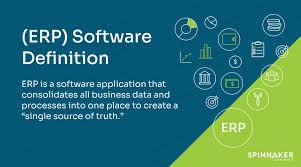
In today’s fast-paced and highly competitive market, growing businesses must operate efficiently, adapt quickly, and make data-driven decisions. As companies expand, managing multiple departments, increasing transaction volumes, and maintaining accurate data can become complex and overwhelming. This is where ERP (Enterprise Resource Planning) software plays a critical role.
ERP systems integrate core business processes into a single unified platform, helping companies streamline operations, improve visibility, and support sustainable growth. Below are the top benefits of implementing ERP software for growing businesses.
1. Centralized Data Management
One of the most significant advantages of ERP software is data centralization. Instead of using separate systems for accounting, inventory, human resources, and sales, ERP consolidates all information into a single database.
This centralized approach:
Reduces data duplication
Minimizes human error
Ensures real-time updates across departments
Provides a single source of truth
With unified data, management can access accurate information instantly, leading to better coordination and faster decision-making.
2. Improved Operational Efficiency
Growing businesses often struggle with manual processes and disconnected systems. ERP software automates repetitive tasks such as invoicing, payroll processing, order management, and inventory tracking.
Automation helps businesses:
Reduce administrative workload
Eliminate redundant tasks
Improve process accuracy
Increase overall productivity
By streamlining workflows, employees can focus on strategic initiatives rather than routine administrative work.
3. Better Financial Management and Reporting
Financial visibility is essential for sustainable growth. ERP systems provide real-time access to financial data, including cash flow, revenue, expenses, and profit margins.
Key financial benefits include:
Automated financial reporting
Improved budgeting and forecasting
Faster month-end closing
Compliance with accounting standards
With accurate financial insights, businesses can make informed decisions and maintain financial stability during expansion.
4. Enhanced Scalability
As businesses grow, their operational needs become more complex. ERP software is designed to scale alongside the organization. Whether adding new users, expanding into new markets, or introducing additional product lines, ERP systems can adapt to increased demands.
Scalable ERP solutions ensure that companies do not outgrow their software, reducing the need for costly system replacements in the future.
5. Improved Customer Service
Customer expectations continue to rise. ERP software integrates sales, inventory, and customer data, enabling businesses to respond quickly and accurately to customer inquiries.
With ERP, businesses can:
Track customer orders in real time
Manage returns and warranties efficiently
Monitor customer purchase history
Improve delivery accuracy
This leads to higher customer satisfaction and stronger long-term relationships.
6. Data-Driven Decision Making
Modern ERP systems include advanced analytics and reporting tools. These features provide dashboards and performance indicators that allow managers to monitor key metrics in real time.
Data-driven insights help businesses:
Identify trends and opportunities
Detect operational bottlenecks
Forecast demand more accurately
Optimize resource allocation
With reliable data, leaders can make proactive decisions rather than reactive ones.
7. Improved Collaboration Across Departments
In growing businesses, communication gaps between departments can slow down operations. ERP software connects teams through shared access to information.
For example:
Sales teams can check inventory availability instantly
Finance departments can track purchase orders in real time
HR can coordinate payroll with accounting
This cross-functional visibility improves collaboration and ensures smoother operations.
8. Stronger Compliance and Risk Management
Regulatory compliance and data security are critical concerns for expanding businesses. ERP systems help maintain audit trails, enforce internal controls, and ensure accurate record-keeping.
Many ERP solutions also include:
Role-based access controls
Automated compliance reporting
Secure data management
These features reduce the risk of fraud, errors, and regulatory penalties.
9. Competitive Advantage
In competitive markets, efficiency and agility are key differentiators. Businesses that implement ERP software can respond faster to market changes, optimize costs, and deliver better customer experiences.
By leveraging automation, real-time analytics, and integrated processes, growing companies position themselves ahead of competitors still relying on manual systems.